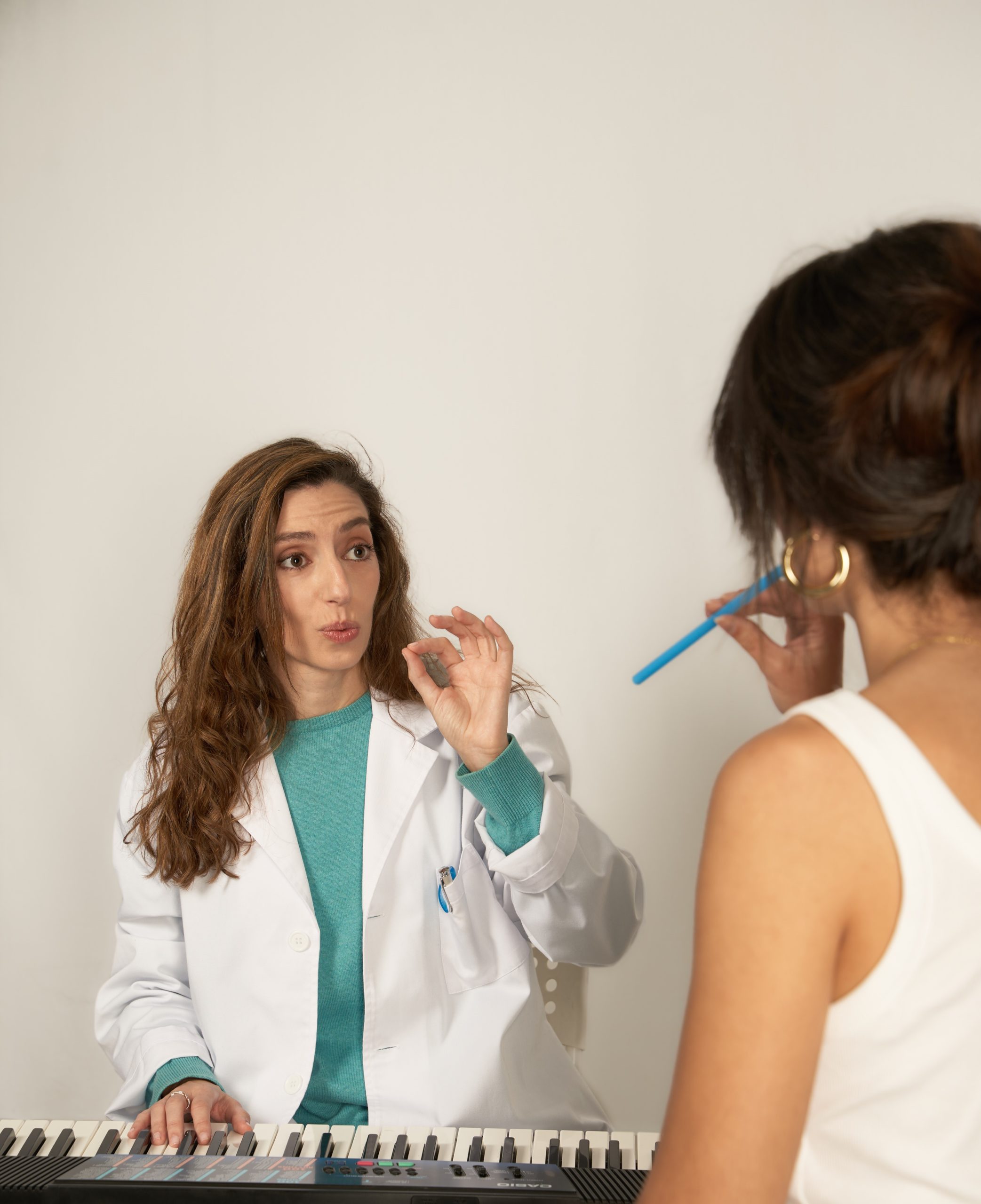
Vocal rehabilitation
"Vocal rehabilitation combines art and science, so a good therapist should be a scientific artist." - Joseph Stemple
Are you suffering from dysphonia or recurrent aphonia? Has the quality of your voice worsened and not returned to normal? Do you get tired of talking or sing and end the day badly, with discomfort or a sore throat? Have you been to an otolaryngologist, do you already have a diagnosis and do you need to undergo speech therapy?
My goals in vocal rehabilitation
May your voice be functional and useful in your work and personal life. That we solve the vocal pathology (if there is no such possibility, that we improve it and/or compensate it as much as possible).
If you are going to undergo surgery.
Give you the tools you need to be able to maintain your vocal health over time without relapse.
Causes
The vocal pathology can occur at any stage of life and may have multiple causesThe most common ones are:
Organic-functional:
- Nodules
- Polyp
- Cyst
- Edema
Organic:
- Congenital pathologies: sulcus, vergeture, synechia, etc.
- Neurological conditions: paresis, paralysis, paralysis, etc.
- Acquired benign laryngeal lesions (e.g. Reinke's edema)
- Inflammatory and laryngeal infections
- Alterations caused by medical treatment and/or surgery
- Endocrine disorders
- Trauma
- Precancerous and cancerous lesions
Functional:
- Laryngeal hyperfunction, muscle tension dysphonia (TMD)
- Contraction
- Vocal fatigue
- Hypofunction
- Closing defect
- Atrophy of vocal cords, etc.
- Presbiphony
- Puberfonia
Psychogens
When they have a psychological origin.
When is vocal rehabilitation necessary?
It is considered that there is a voice disorder when there is an alteration in the pitch, timbre, intensity or flexibility of the voice.
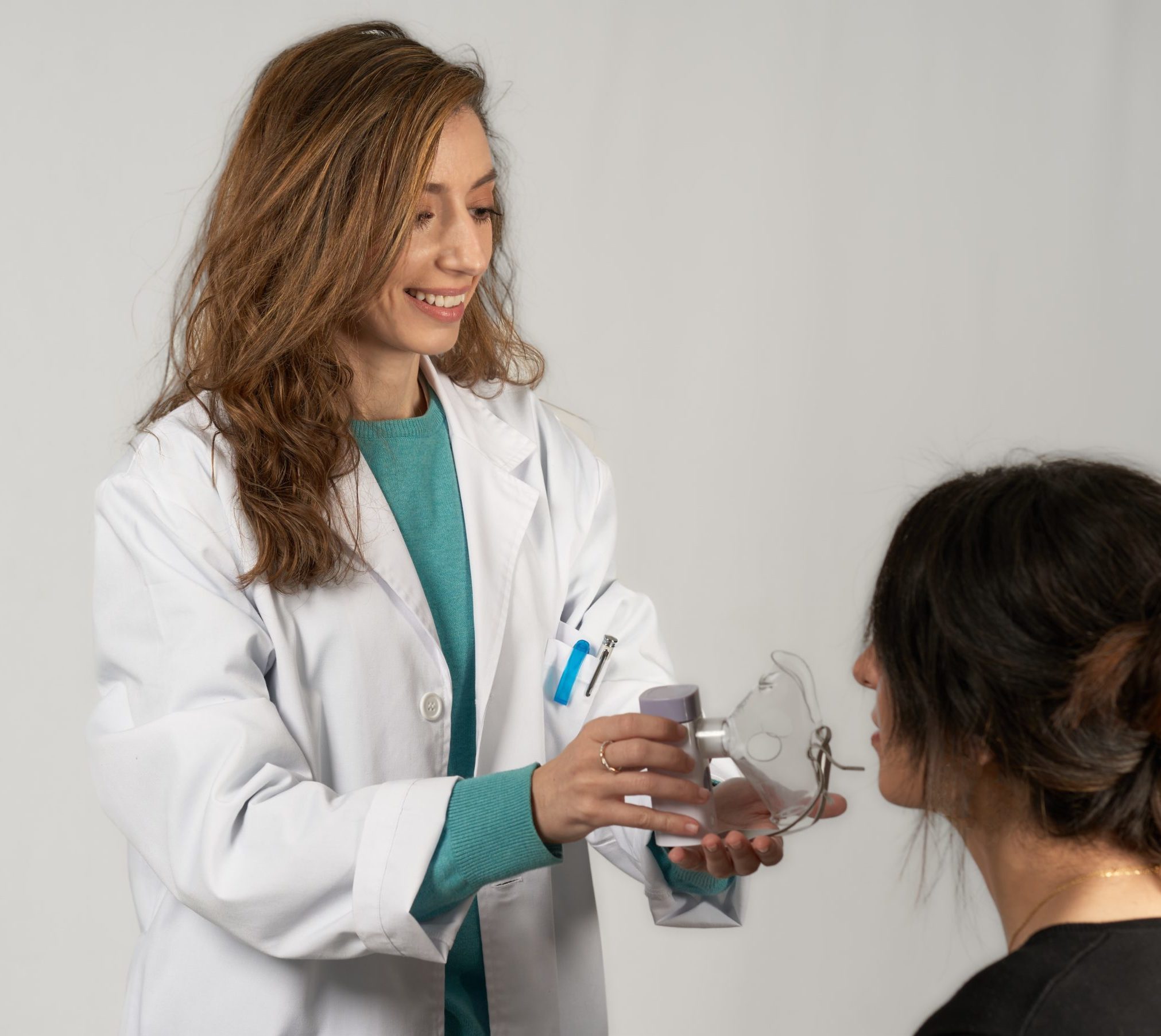
In these cases, a phoniatric rehabilitation will be indicated, whether you are a voice professional or not so vocally demanding.
Go to a Speech Therapist Specialist in Voice if you want to put yourself in the right hands and really know how to treat your case with the professionalism and success you deserve.
* The speech therapist is the only professional legally authorized to perform a rehabilitation of your voice.
How is the vocal rehabilitation process
If the vocal rehabilitation process proceeds normally, we follow the next steps:
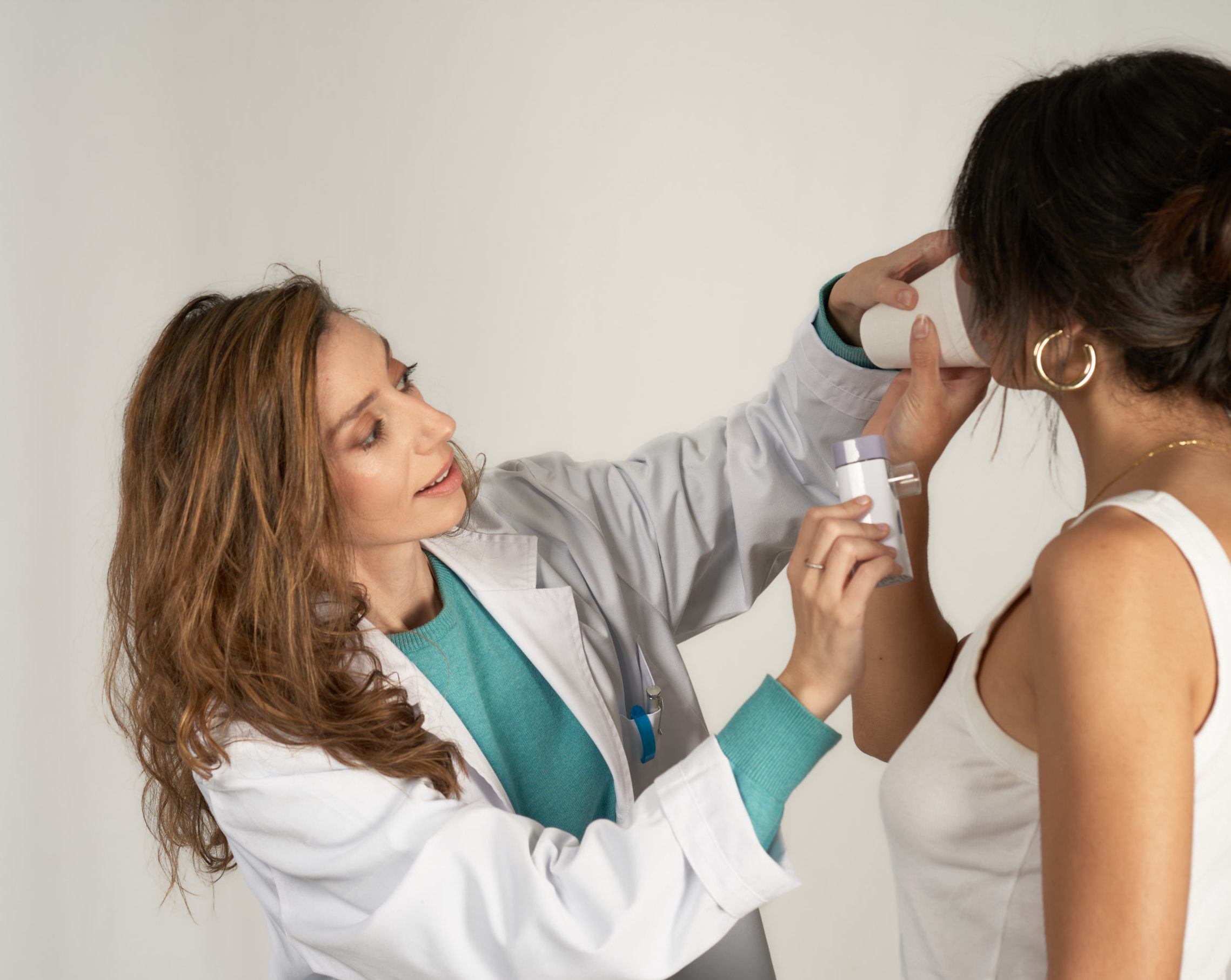
EvaluationIt consists of an exhaustive anamnesis (collection of relevant and necessary information), a functional-perceptual evaluation, taking phonatory times, an acoustic analysis with a specific program and self-assessment questionnaires by the patient.
TreatmentTreatment: Based on the assessment, a personalized treatment is designed, tailored to the specific needs of the individual.
I also value as a professional the most appropriate and recommendable periodicity in each case.
ControlsWe carry out controls from time to time to objectively evaluate the evolution.
RevisionsOnce the treatment is finished, we carry out occasional check-ups to determine if the progress achieved is maintained over time without our periodic sessions.
HighWhen the reviews are positive and the person maintains recovery and/or improvement, we proceed to discharge.
Frequently Asked Questions
Anyone with persistent hoarseness, discomfort when speaking or singing, or who has suffered a vocal injury.
Depends The number of cases may vary from a few weeks to several months, depending on the severity, the objectives of the case, and the and commitment to treatment.
Work with all age groups: children, youth and adults.
No, it is aimed at anyone who needs to improve, recover or care for their voice, regardless of their profession.
Yes, a medical or speech therapy diagnosis is essential to identify the problem and design an appropriate treatment.
Yes, they should be done to reinforce what you have worked on. It is the way for your voice to generalize in your life what you work with me in the sessions.
I have been practicing teletherapy for many years and working online with very good results.
Nowadays, there are multiple researches that demonstrate with scientific evidence that voice work and voice therapy are exactly as effective as face-to-face therapy and without distinctions between both modalities (as long as the professional is the right one).
I see people from many parts of the world on a daily basis and in fact there are those who even living in Madrid city like me, also do online sessions with me.
If you have any doubts, try the experience and you will see the results.
However, if you need to meet me in person or I consider that for some reason it is necessary to have a face-to-face session, we can do it in my office in Madrid (Arturo Soria area, Ciudad Lineal district) and I also go to homes throughout the Community of Madrid.
Yes, and not only that. Online sessions have multiple advantages:
- Save time without losing quality and comfort.
- It allows you to do the sessions from home, work or wherever you prefer.
- With the same effectiveness, professionalism, trust and closeness as in-person sessions.
- Without wasting time on travel.
- Costs can be reduced.
- Greater time flexibility.
- Continuity of treatment, because I will be able to see you wherever we are, as long as you have a device with internet connection.
- Accessibility for people with reduced mobility.
- I can work with you wherever you are, regardless of the country and continent you are in. Despite time changes, we always find a time to match.
Your Voice matters. You matter.
Thanks to teletherapy you will be able to take care of your voice in an effective way and adapted to your needs without having to leave your home. Save time without losing quality. I guarantee that the online sessions are just as effective. Would you like to check it out?
Testimonials
Those who take care of their voice say so: